Biblical purpose is rooted first in belonging to God. We are created through Christ and called to love God and neighbour; particular work and seasons are lived inside that larger vocation.
Read in context
Popular purpose verses are often treated as private career promises, yet their contexts are communal and God-centred. Romans speaks of God conforming his people to Christ. Ephesians describes a people saved by grace for good works. Ecclesiastes honours seasons we cannot control. Purpose is less about discovering one hidden perfect plan and more about faithful participation in what God is doing.
A prayerful way to use these passages
Start with the responsibilities and neighbours already entrusted to you. Notice your gifts, limits, opportunities, and the needs around you. Pray, seek wise counsel, and test direction over time. A purposeful life can include ordinary work, waiting, caregiving, repentance, rest, and service that receives little attention.
What good work of love is already in front of me in this season?
Read with the bigger picture in mind. Each passage below includes a note about its context. How we approach Scripture.
Selected passages. Open a passage to read, reflect and continue within this theme.
Paul writes this assurance amid suffering, creation's groaning, and the Spirit's intercession; the next verse defines the good in relation to becoming like Christ. It does not call every event good or offer a simple explanation for tragedy.
After insisting that salvation is God's gift rather than human achievement, Paul calls the church God's workmanship in Christ for good works. Purpose is a grateful response to grace, never a way to earn belonging.
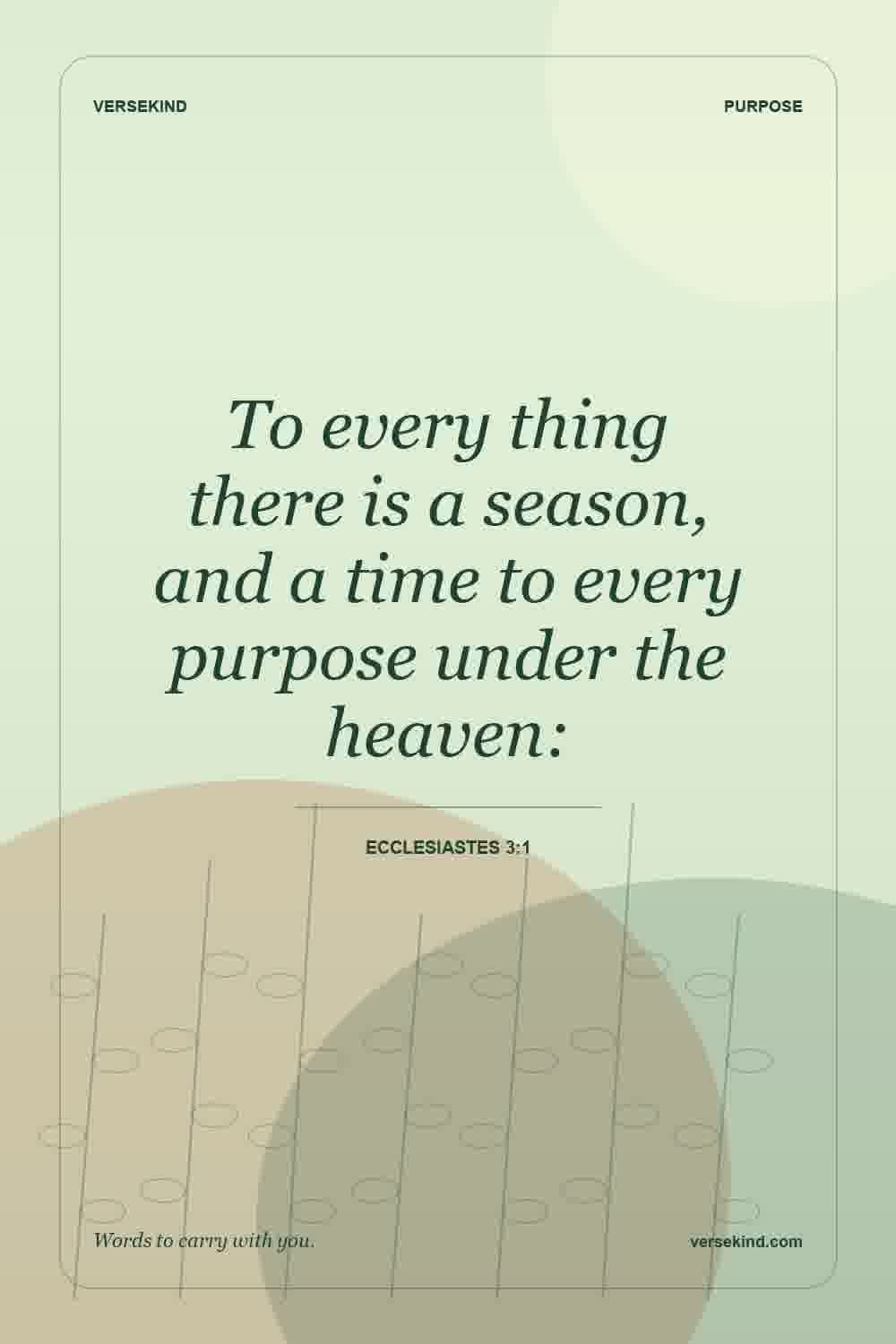
This line introduces a poem about times and seasons that human beings cannot finally master. It encourages humility about limits and change, not fatalistic approval of everything that happens.
Within a hymn celebrating Christ's supremacy, Paul says that all creation came through him and exists for him. Christian purpose therefore begins with Christ rather than with private fulfilment or public recognition.
Paul speaks to a community called to humble unity and obedience after presenting Christ's self-emptying example. God's work within willing and doing supports shared faithfulness, not a guarantee of personal success.
Paul encourages Timothy not to be ashamed amid suffering and grounds their holy calling in grace given in Christ, not in works. Vocation may involve costly witness, so purpose should not be measured only by comfort or visible results.
David praises God for answering him and trusts the Lord's enduring mercy while trouble is still present. Confidence in God's faithful care is not a promise that he will complete every private plan exactly as imagined.