Biblical gratitude remembers the Giver. It notices grace, tells the truth about hardship, and answers God’s character and gifts with worship, generosity, prayer, and a life offered back to him.
Read in context
The Psalms invite communities to enter God’s presence with thanksgiving. Paul connects gratitude with prayer, peace, generosity, and life in Christ. Ephesians speaks of giving thanks “for all things” within a Spirit-filled life centred on Christ; this must never be used to call evil good or silence lament. Gratitude keeps recognizing God’s presence and mercy without denying harm or grief.
A prayerful way to use these passages
Name one specific gift rather than a vague positive thought, and name the Giver. Consider who else participated in that gift and whether thanks should become a message, act of service, or generosity. When you are grieving, allow gratitude and sorrow to share the same prayer without forcing either one away.
What grace have I received that I can remember, name, and share today?
Read with the bigger picture in mind. Each passage below includes a note about its context. How we approach Scripture.
Selected passages. Open a passage to read, reflect and continue within this theme.
This communal song invites worshippers to enter God's courts with thanksgiving because the Lord is good and faithful. Gratitude is a response to God's character and an act of shared worship, not merely a technique for improving mood.
Paul speaks to the church's whole life together and places word and deed under the name of Jesus with thanksgiving to the Father. Gratitude belongs with integrity: what cannot honour Christ should not be baptized with thankful language.
This instruction belongs to Paul's picture of a Spirit-filled, worshipping community centred on Christ. Giving thanks “for all things” must not mean calling evil good or silencing lament; Christian gratitude trusts God without excusing harm.
After practical instruction for Christian households, Paul calls the church to persist in watchful, thankful prayer. Thanksgiving accompanies attentiveness and endurance rather than replacing action with passive optimism.
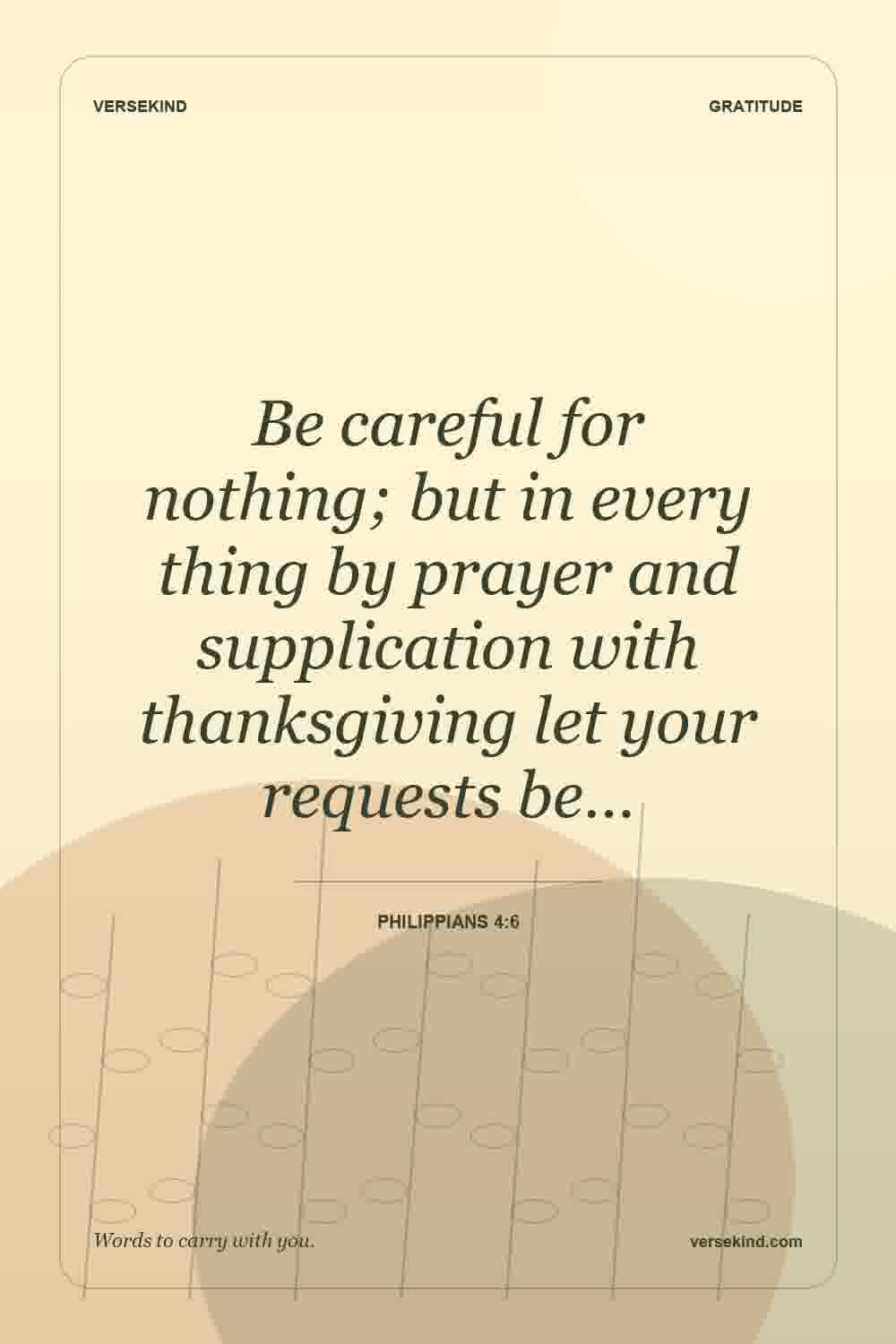
Paul invites a church facing conflict and pressure to bring every concern to God with request and thanksgiving. The verse does not shame anxiety or forbid support; it gives anxiety a truthful direction in prayer.
The psalm begins with joyful thanksgiving and later warns the gathered people not to harden their hearts. Gratitude therefore belongs with listening and obedience, not praise that leaves the rest of life untouched.
Psalm 118 celebrates the Lord's deliverance and the vindication associated with the rejected stone. Rejoicing answers God's saving action; it is not a demand that grieving people perform cheerfulness on every calendar day.
Paul ends his appeal about generous sharing by turning attention from human gifts to God's surpassing gift and grace. True thanksgiving can open the hands to others, but it must never be used to manipulate someone into giving.