Biblical peace is deeper than a quiet schedule. It is the wholeness that grows when we are reconciled to God, entrust our fears to him, and learn to walk faithfully even while circumstances remain unsettled.
Read in context
The passages below move from nightly rest in the Psalms to peace with God in Romans, God’s peace shaping the life of the church, and Jesus’ honesty that his followers will still face trouble. Read together, they keep peace from becoming a promise of an easy life. Scripture presents it as God’s presence and rule holding us steady in the middle of real life.
A prayerful way to use these passages
Begin by naming what is disturbing your peace without minimizing it. Read one passage slowly, notice what it says about God rather than only about your emotion, and turn its words into a short prayer. If conflict with another person is involved, ask what truthful, gracious step toward reconciliation is yours to take.
What am I trying to control today that I can honestly place before God?
Read with the bigger picture in mind. Each passage below includes a note about its context. How we approach Scripture.
Selected passages. Open a passage to read, reflect and continue within this theme.
This evening prayer closes with the psalmist resting in the Lord even while opposition remains around him. Christian trust can make room for sleep without pretending that every danger or anxious feeling has already disappeared.
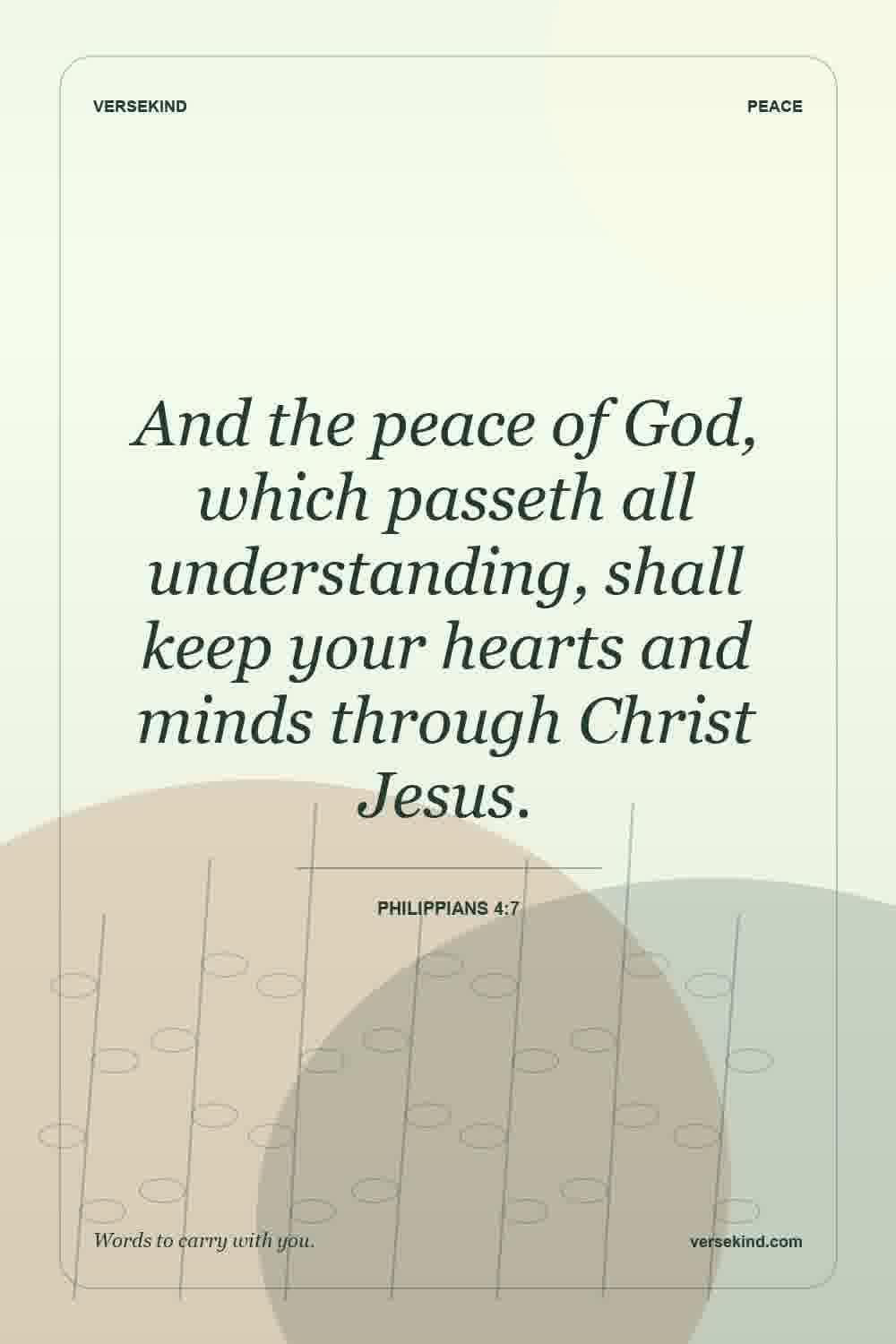
Paul writes to a church and connects this guarding peace with prayer, honest requests, and thanksgiving. The promise is God's keeping presence in Christ, not an assurance that difficult circumstances or anxious symptoms will vanish at once.
Paul addresses one gathered body after calling believers to compassion, forgiveness, and love. God's peace is therefore more than a private mood: it should shape grateful relationships and the way Christians handle conflict together.
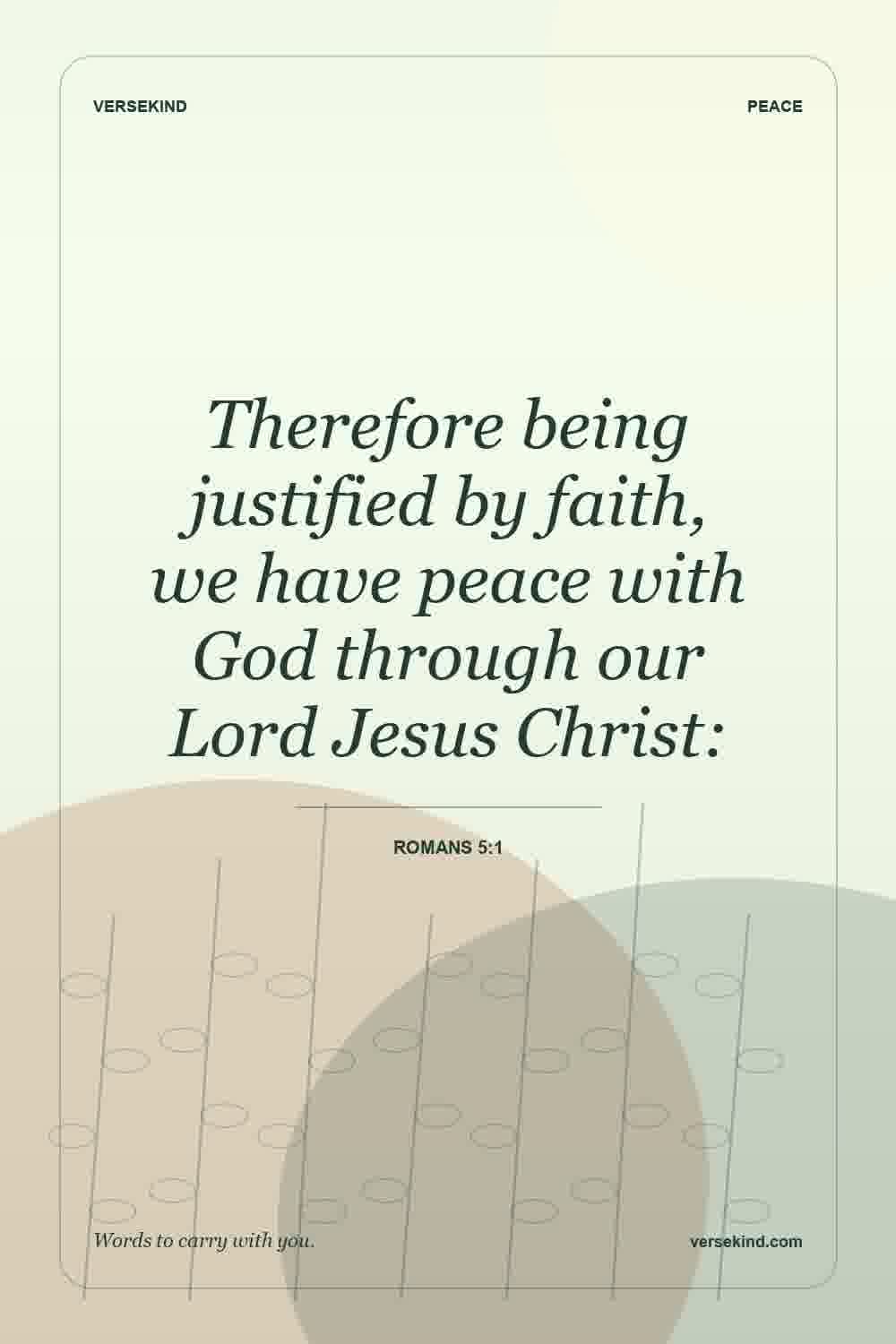
Paul has just explained justification by faith and now announces peace with God through Jesus Christ. This is first a restored relationship received by grace, from which a steadier life of trust can grow.
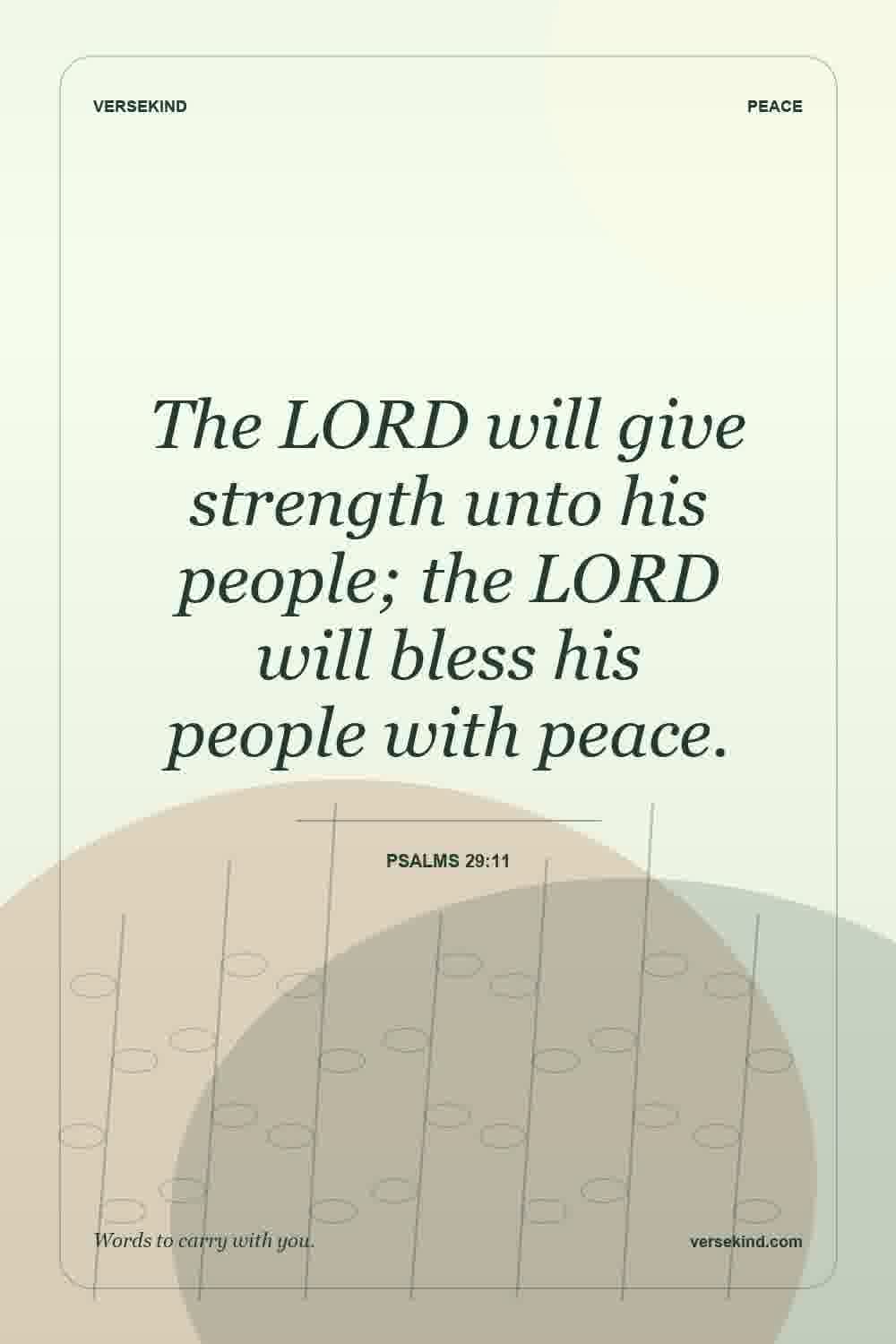
Psalm 29 praises the Lord whose voice rules over the storm and ends by naming strength and peace as his gifts to his people. Worship does not deny the storm; it locates the worshipper beneath God's greater authority and care.
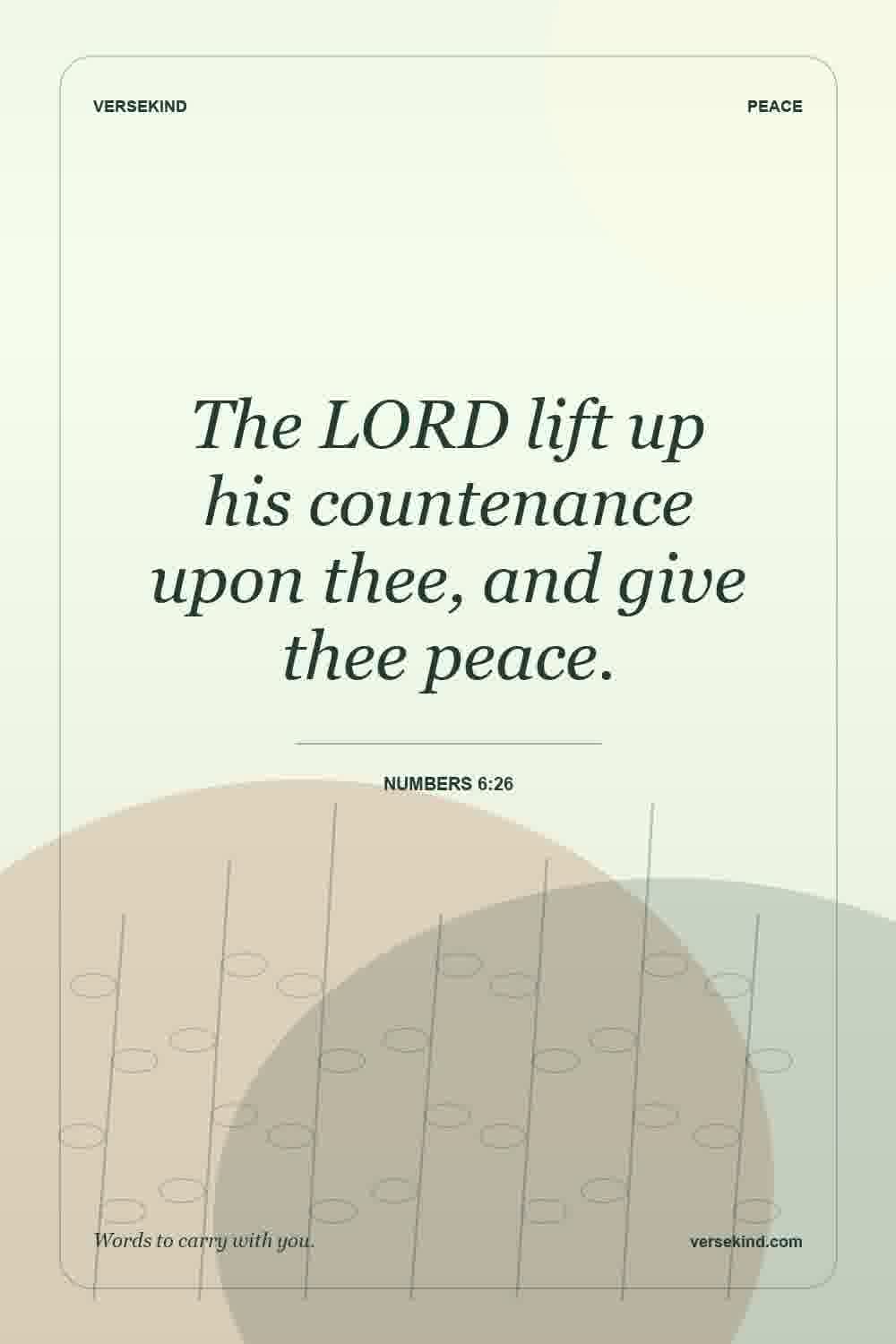
This line belongs to the priestly blessing spoken over Israel, where peace is given with the Lord's gracious presence. It is a blessing to receive with humility, not a formula for controlling outcomes or avoiding every hardship.
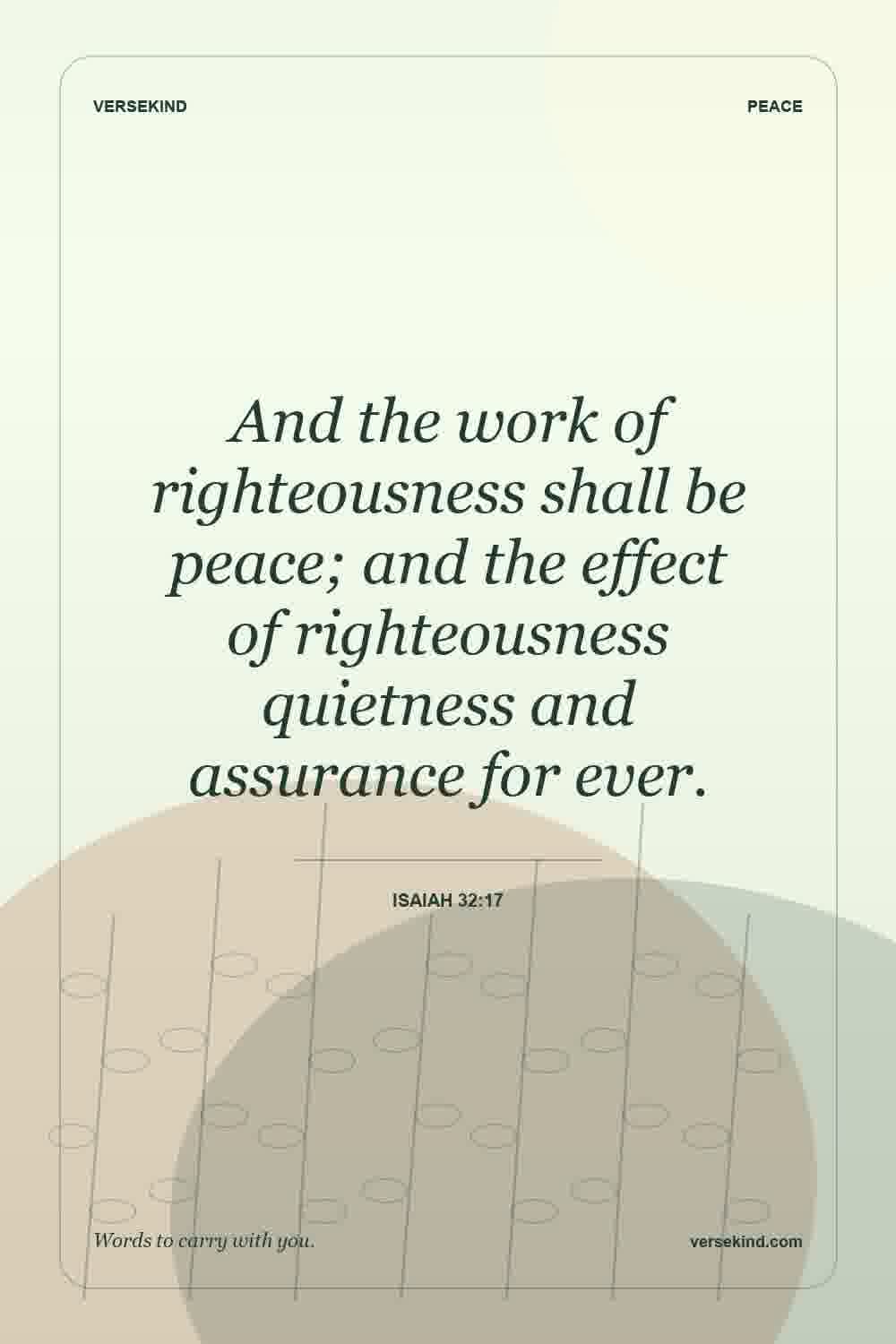
Isaiah places peace within a prophetic vision in which righteousness and justice bear lasting fruit. The verse does not offer a shortcut to personal ease; it invites hope for God's right ordering and participation in what is just.
Jesus speaks these words to his disciples shortly before his arrest, preparing them for grief, pressure, and his coming victory. Peace is found in him in the middle of trouble, not in a promise that faithful people will never face it.
This community prayer waits for restoration and listens for the peace God will speak, while also warning against returning to folly. Receiving peace includes a responsive life that turns again toward God's faithful ways.