Scripture speaks of God as healer while also giving room for lament, medical care, community prayer, patient endurance, and the Christian hope of final restoration in Christ.
Read in context
Healing passages occur in different settings: psalms of personal prayer, prophetic promises, Jesus’ embodied compassion, and Christ’s redemptive suffering. Isaiah 53 and 1 Peter 2 place “healing” within the servant bearing sin and restoring people to righteousness, while Matthew 8 also applies Isaiah’s language to Jesus’ bodily healings. None should be turned into a formula or used to blame someone whose illness continues, and no selected verse promises that every request will be answered immediately in the same way.
A prayerful way to use these passages
Bring the whole reality before God—body, mind, grief, relationships, and practical needs. Ask trusted people to pray, and seek qualified medical or mental-health care when needed. Read the surrounding passage, then pray with both boldness and surrender. Make room for grace given through treatment, rest, community, and endurance.
What kind of healing, help, or faithful support do I need to ask for today?
Read with the bigger picture in mind. Each passage below includes a note about its context. How we approach Scripture.
Selected passages. Open a passage to read, reflect and continue within this theme.
This hymn praises the God who gathers a scattered people, rebuilds Jerusalem, and binds up broken hearts. Its healing language embraces communal restoration and tender care; it does not promise that every wound closes immediately.
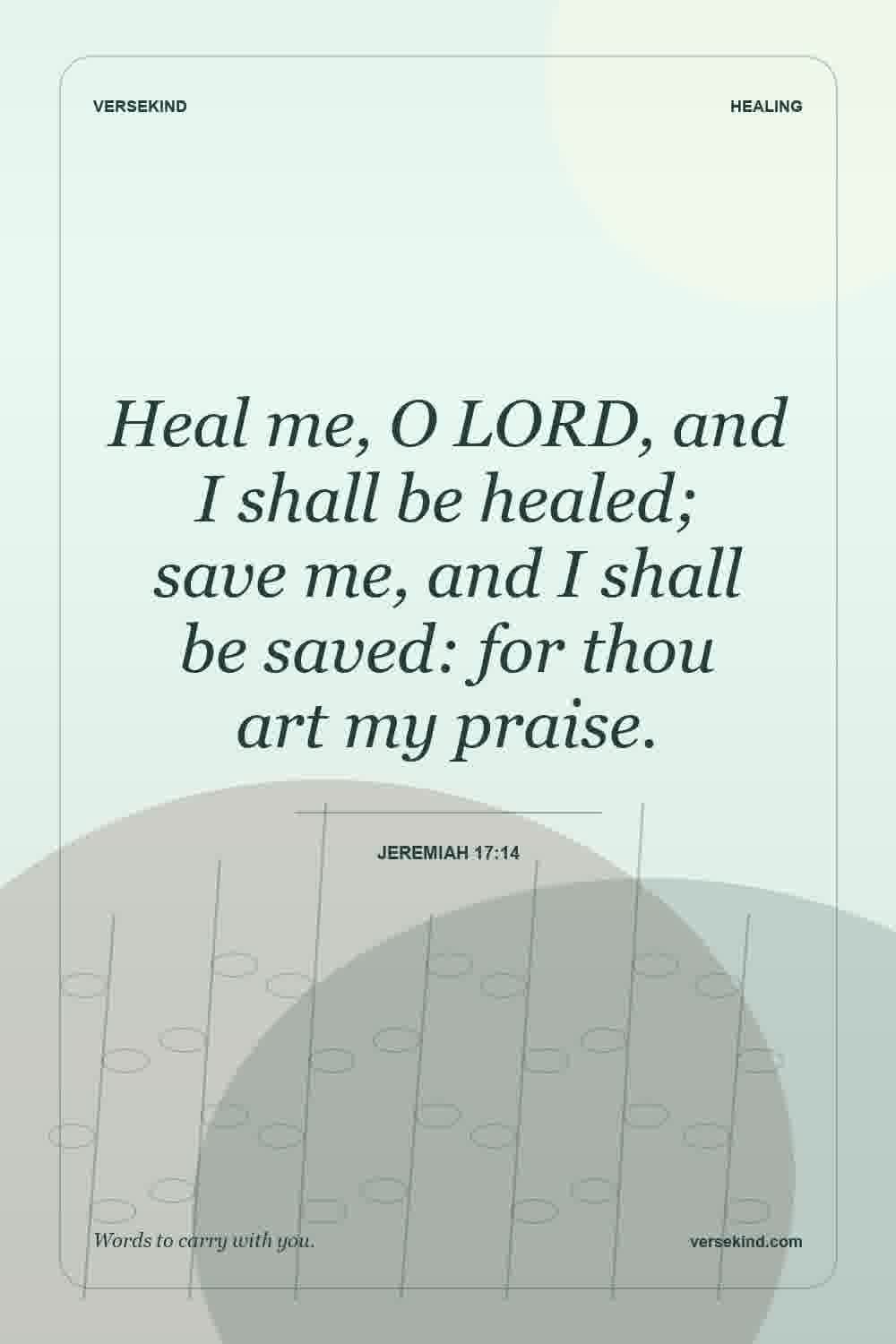
Jeremiah prays for healing and rescue while facing opposition and warning Judah about misplaced trust. His words are an honest petition to God, not a self-executing declaration that removes the need for care or patient waiting.
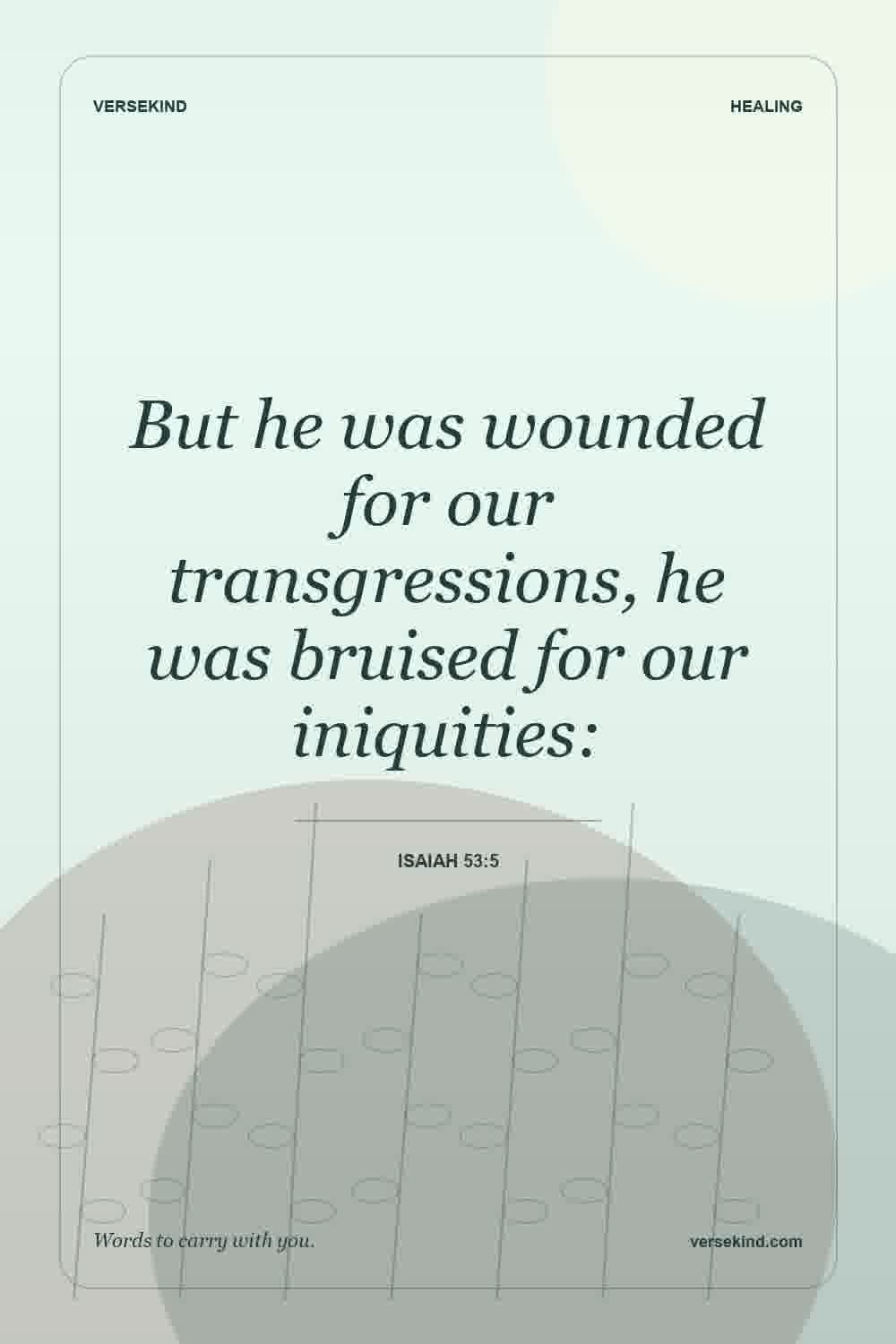
Isaiah's servant song speaks of transgression, iniquity, peace, and healing through the suffering servant. Christian reading finds its centre in Christ's sin-bearing and reconciliation; the line must not be isolated as a guarantee that every illness will be cured now.
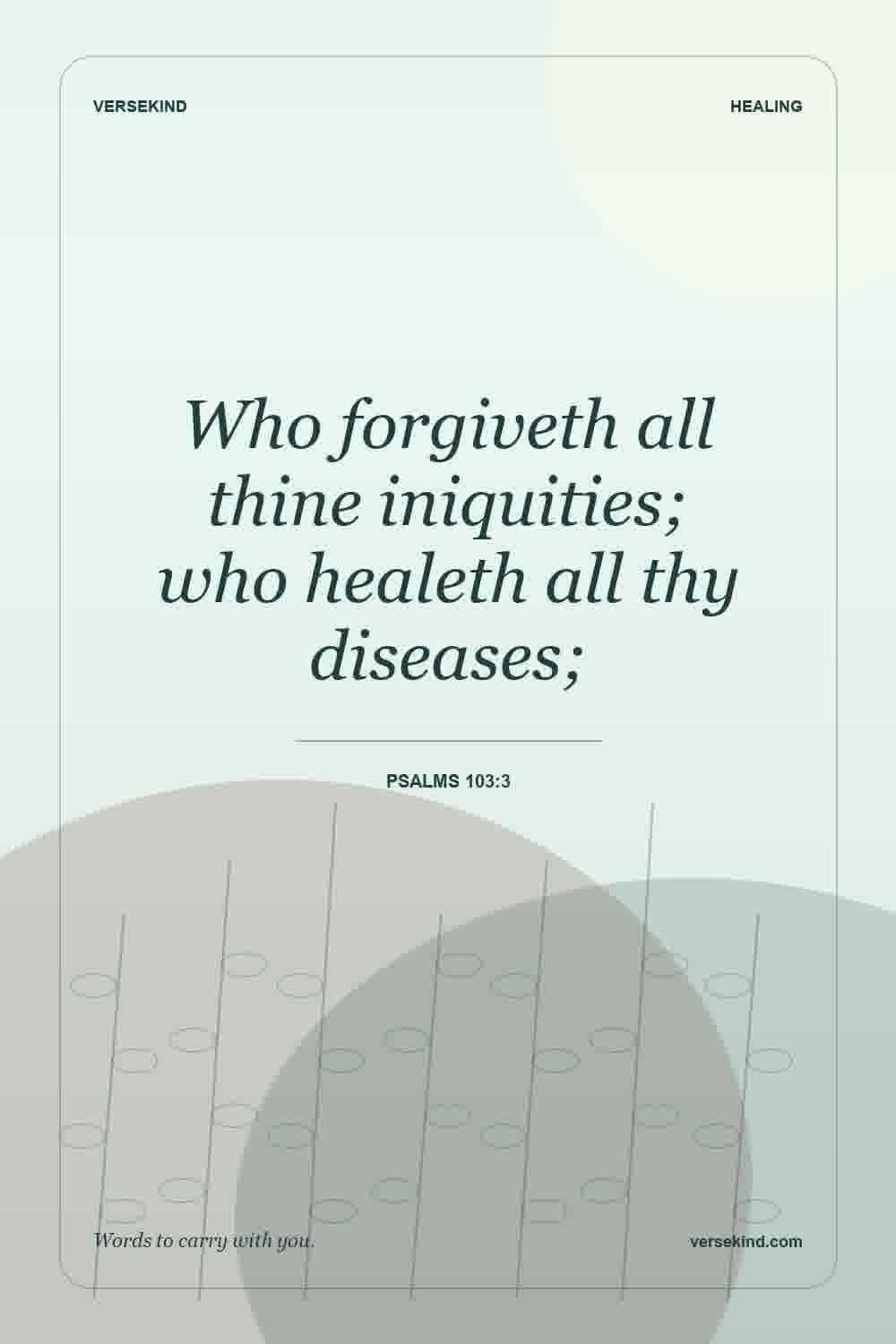
The psalmist calls his own soul to remember the Lord's forgiveness, healing, redemption, and compassion as a whole testimony of mercy. This poetic praise is not a timetable for recovery and does not make treatment or lament faithless.
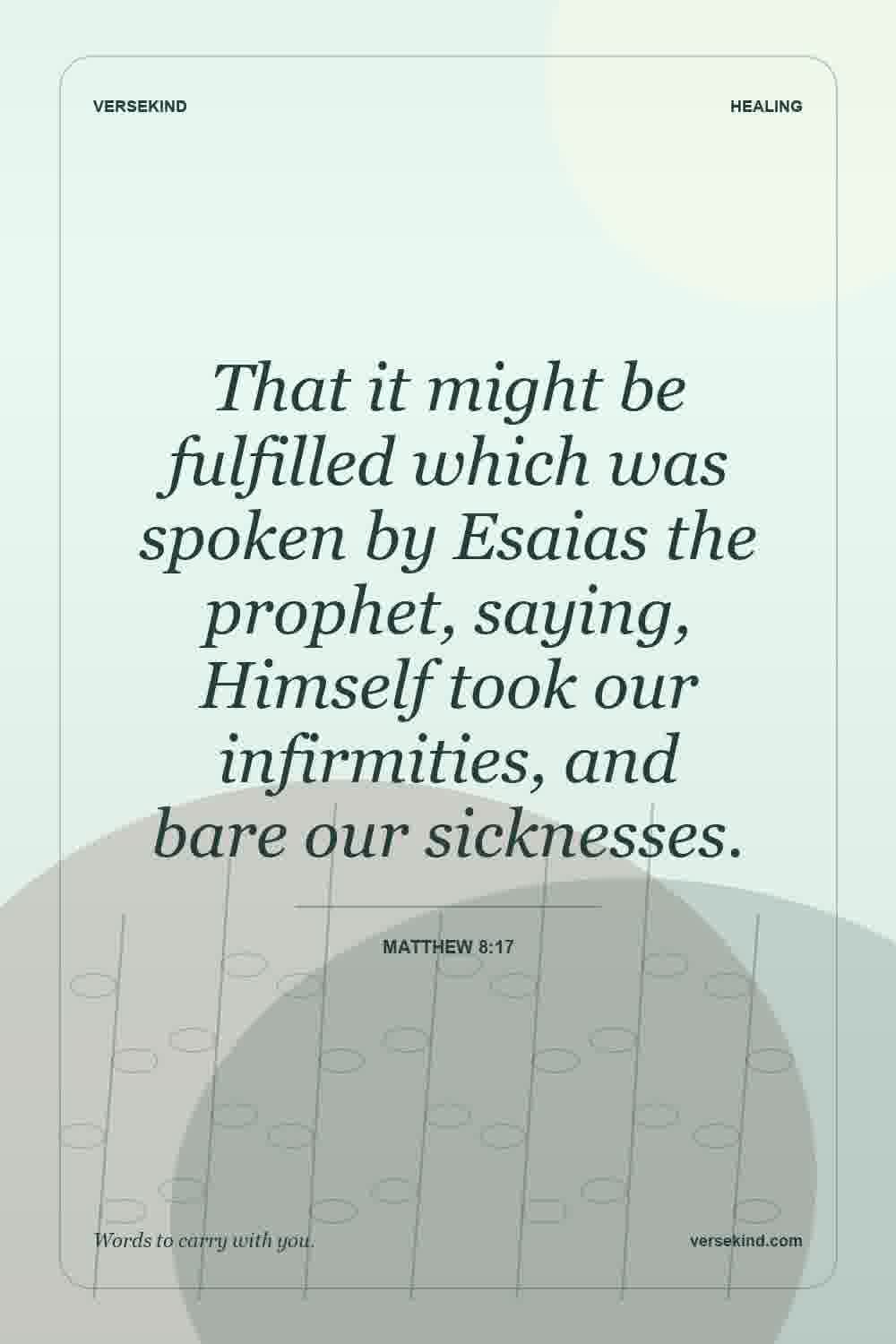
Matthew connects Jesus' many acts of bodily healing with Isaiah's words about bearing infirmities. The scene reveals Christ's compassion and kingdom authority, but it does not turn every request for healing into an entitlement or formula.
Luke reports a crowd seeking Jesus as power goes out from him and heals those gathered there. This narrative witnesses to Jesus' ministry; it is not a technique readers can reproduce or a reason to blame someone whose illness continues.
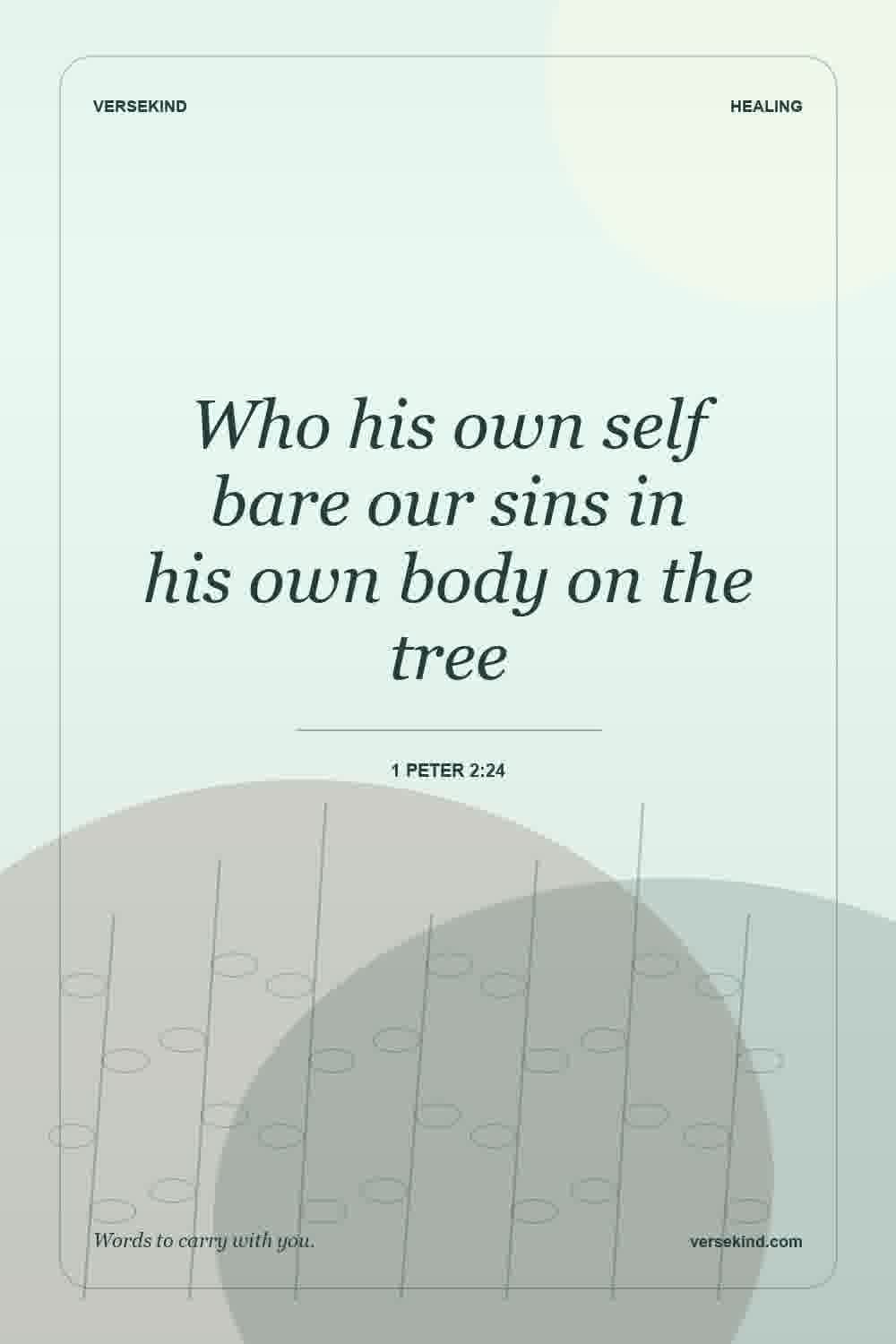
Peter applies the servant song to Christ bearing sins so that believers might die to sin and live to righteousness. “Ye were healed” directly includes restoration from sin and must not be used to insist that faithful Christians are always physically cured in the present.